
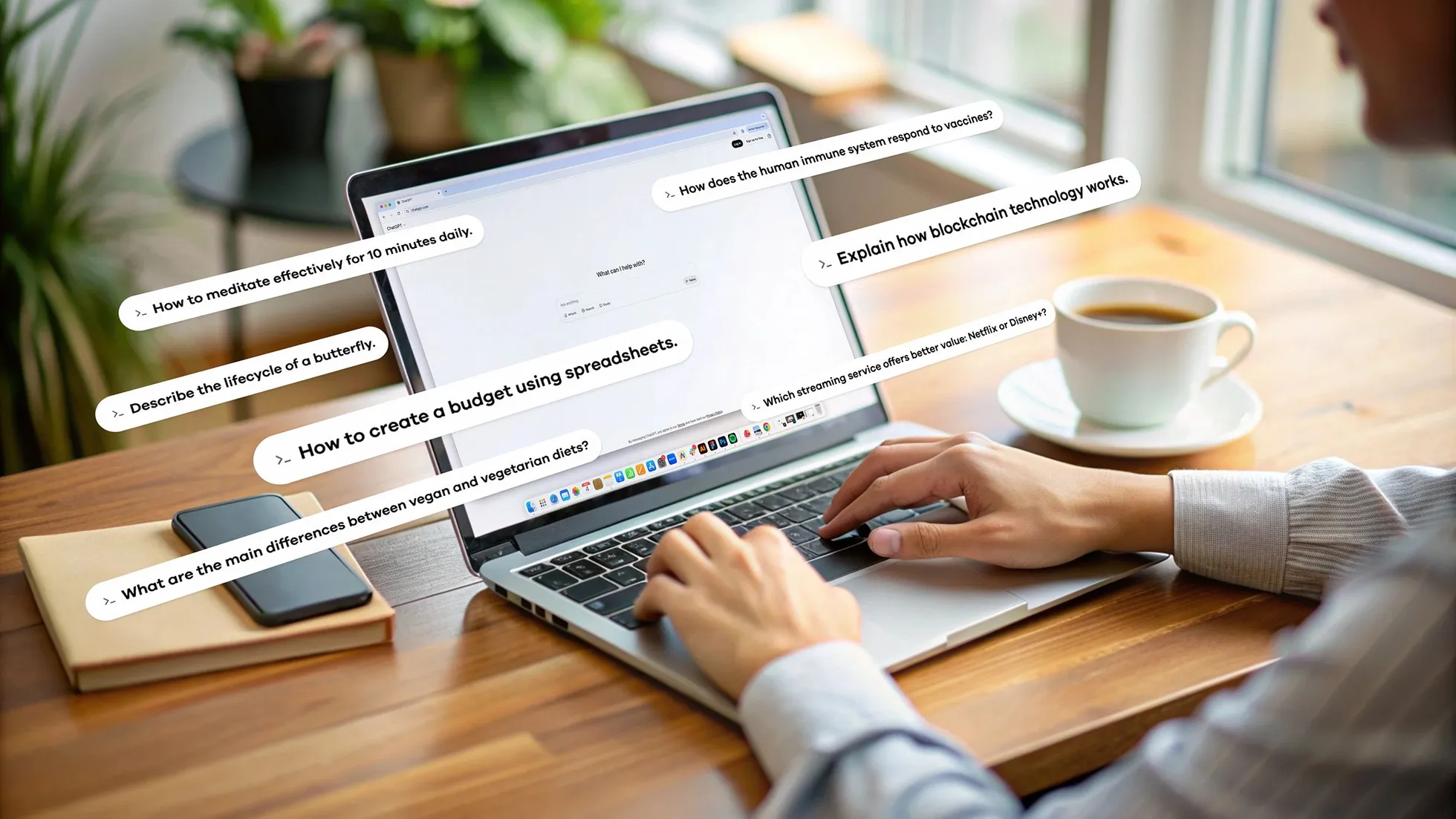
How to Write AI Prompts That Produce Great Marketing Content: A Guide for UAE Business Owners

Two Dubai restaurant owners both start using ChatGPT the same week. The first types "write me an Instagram caption for my restaurant" and receives something generic, cheerful, and completely forgettable — the kind of caption that could apply to any eatery in any city in the world. She edits it for twenty minutes, publishes it anyway, and concludes that AI is not much use for her business. The second types a specific, structured prompt that specifies cuisine type, target customer, Dubai neighbourhood, tone, occasion, and desired call to action. She receives a caption so on-point that her social media manager asks who wrote it. She publishes it in ninety seconds.
Same tool. Completely different results. The difference is not the AI — it is the prompt.
Prompt engineering — the practice of writing instructions that get AI to produce exactly what you need — is the most valuable marketing skill a UAE business owner can develop in 2026. Research from digital agency networks shows that marketers using structured prompt frameworks achieve 340% higher ROI on their AI investments compared to those using ad-hoc approaches. Companies with well-built prompt systems reduce content production time from five days to under two hours for standard campaign assets. The gap between "I tried AI and it doesn't really work" and "AI has transformed how fast we can produce content" is almost entirely explained by prompt quality.
This guide gives you the complete system: the anatomy of a strong prompt, the UAE-specific elements that generic guides miss, a brand brief document you can build today, twenty ready-to-use prompt templates for the content types UAE businesses produce most, and the most common prompt mistakes that produce mediocre output. By the end, you will have a repeatable system — not just a few tips.

Why Most AI Prompts Fail — and Why This Matters More in the UAE
The single most common reason AI marketing content disappoints is not the AI's capability. It is that the prompt treats the AI as a mind reader. A prompt like "write me a social media post about our new product" contains almost none of the information the AI needs to produce something useful: Who is the audience? What is the product? What platform? What tone? What is the desired action? What makes this product different from competing products? What cultural context applies?
Without these inputs, the AI defaults to its training data's average — which is predominantly Western, English-market content from industries and demographic contexts that may have nothing to do with your business in Jumeirah, Al Quoz, or the DIFC. The generic output you receive is not a failure of AI. It is a failure of the instruction.
The UAE context amplifies this problem in three specific ways that generic prompt engineering guides do not address.
The multicultural audience problem. A prompt that does not specify which segment of the UAE's 200+ nationality population it is targeting will produce content calibrated to some average that fits none of them well. Content for Emirati nationals, South Asian expat professionals, Arab expat families, and Western expat executives requires different tone, different cultural references, different formality levels, and sometimes different language choices — even within a single campaign.
The bilingual output problem. Most UAE businesses need English and Arabic marketing content. Generic AI prompts produce English content and then bad Arabic translations. Correctly structured prompts for UAE businesses specify bilingual requirements explicitly, including Arabic dialect (Gulf Arabic vs Modern Standard Arabic), directionality instructions, and the requirement for native Arabic speaker review of any generated Arabic content.
The seasonal context problem. The UAE's marketing calendar — Ramadan, Eid Al Fitr, Eid Al Adha, UAE National Day, Dubai Shopping Festival — requires cultural precision that no AI will apply automatically. A prompt for Ramadan content that does not specify the required tone (warm, generous, community-oriented, not aggressively promotional), the timing considerations (Iftar hours, late-night peak activity), and the cultural sensitivities will produce output that is technically about Ramadan but tonally wrong for the market.
The Anatomy of a Strong Marketing Prompt: Six Elements Every UAE Business Owner Needs
A strong marketing prompt is not longer than a weak one for the sake of length — it is longer because it contains the specific information the AI needs to produce something useful. Every effective prompt for a UAE business contains some combination of these six elements, and the most productive prompts contain all six.
Element 1: Role assignment
Tell the AI what expert it is acting as before you tell it what to do. This single instruction dramatically improves output quality by priming the AI to draw on the specific knowledge domain relevant to your task.
Without role: "Write a LinkedIn post about construction project management."
With role: "You are a senior B2B copywriter with fifteen years of experience writing for construction and real estate companies in the UAE and GCC markets."
The role does not need to be elaborate — a single, specific sentence is sufficient. But it should be specific to your industry and market rather than generic ("you are an expert writer") which adds no useful information.
Element 2: Audience specification
Describe your target customer with enough precision that the AI can calibrate tone, vocabulary, cultural references, and persuasion approach to that specific person — not to a generic marketing persona.
Vague audience: "targeting professionals in Dubai"
Specific audience: "targeting senior Emirati procurement managers at government-linked entities in Abu Dhabi, aged 40–55, who are technically knowledgeable and respond to formal Arabic communication and quantified efficiency claims rather than lifestyle aspiration"
The more specific your audience description, the more the AI output reads like it was written for a specific person rather than broadcast at everyone.
Element 3: Brand voice and tone
Provide three to five adjectives that describe how your brand communicates, plus one sentence of negative guidance (what your brand is not). This is the element most commonly omitted, and its absence is why AI-generated content so often sounds generic — the AI has no reference point for your specific voice and defaults to a neutral, professional register that fits no brand particularly well.
Example: "Brand voice: warm and expert, not corporate. Confident without being aggressive. Dubai-rooted but internationally fluent. We never sound formal or stiff — our clients feel like they are getting advice from a trusted local professional, not a multinational."
Element 4: Context and constraints
Specify the platform, format, length, cultural occasion (if applicable), what to include, and — critically — what to avoid. UAE-specific constraints include modesty standards for consumer-facing content, religious sensitivity requirements, competitive reference rules (can you name competitors or not?), and regulatory constraints (financial services, healthcare, real estate, and legal businesses all have UAE-specific advertising restrictions).
Example constraint layer: "Platform: LinkedIn. Length: 200–250 words. This is for the week before Eid Al Fitr, so open with a warm Eid greeting that feels genuine rather than commercially obligatory. Avoid promotional language in the first paragraph. Do not reference specific competitor brands. The audience is corporate B2B so no emoji."
Element 5: Specific output format
Tell the AI exactly what you want back. The more specific your format instruction, the less post-editing you will need to do. For most marketing content, this means specifying number of variants, structure (headline + body + CTA, or H1 + three H2 sections + FAQ), length in words or characters, and whether you want English only, Arabic only, or both.
Example: "Output format: three caption variants, each under 150 words. After each English caption, provide a Gulf Arabic translation suitable for an Emirati audience. End each caption with a call to action directing the reader to WhatsApp us."
Element 6: An example (when you have one)
If you have a piece of content that is exactly the right tone, style, and quality — a previous post that performed well, a competitor's content you admire, a piece your best copywriter produced — paste it into the prompt as an example with the instruction "write in a similar style to this example." This is the fastest way to transfer tone and style preferences that are difficult to articulate in adjectives alone. Known as "few-shot prompting" in AI terminology, it consistently improves output quality for tone-sensitive tasks more than any other single technique.
The Brand Brief Document: Your Most Valuable Prompt Engineering Asset
The single highest-leverage prompt engineering investment a UAE business owner can make is spending two hours writing a brand brief document — and then pasting it at the start of every ChatGPT conversation before making any request.
The brand brief is a 400–800 word document about your business, your customers, your brand voice, and your key messages. It is not a marketing strategy document or a formal brand book — it is a practical information package that gives the AI enough context about your business to produce relevant, on-brand output without you having to re-explain your business in every prompt.
A brand brief document for a UAE business should contain the following components:
Business description (3–4 sentences): What your business does, where it operates, who owns it, and what makes it different from competitors. Name your industry specifically. Name your location (Dubai, Abu Dhabi, or specific free zones like DIFC, TECOM, DMCC). Mention the nationalities or segments of the UAE market you primarily serve.
Target customer profiles (2–3 profiles): A brief paragraph for each primary customer segment. Include demographics, cultural background, what they care about, how they prefer to be communicated with, and what their primary concern is when buying your product or service. For UAE businesses, this should include nationality or cultural background where it affects communication style.
Brand voice guide: Five adjectives that describe your brand tone. One sentence describing what you are not (e.g., "we are never formal, stiff, or corporate"). One to two examples of content you consider perfectly on-brand.
Key messages (3–5 bullet points): The core claims that differentiate your business. These are the things you want to say in almost every piece of marketing content — the value propositions that are specific to your business and cannot be applied to any competitor.
Content rules: Things the AI should always include (e.g., WhatsApp contact, AED pricing, halal certification if relevant), things it should never include (e.g., alcohol references, competitor names, claims the business cannot substantiate), and any regulatory constraints on your industry's advertising.
Bilingual preferences: Whether you produce English-only, Arabic-only, or bilingual content; preferred Arabic dialect (Gulf Arabic vs MSA); and the instruction that Arabic content must always be reviewed by a native speaker before publication.
Once your brand brief is written, save it as a text file or note. Begin every ChatGPT or Claude session by pasting the brand brief with the instruction: "This is my brand brief. Use this as context for everything I ask you to produce in this conversation." The immediate improvement in output quality — without changing anything else about your prompts — is the most common reaction from UAE business owners who implement this practice.
Weak vs Strong: 8 Real Prompt Comparisons for Common UAE Marketing Tasks
These eight side-by-side comparisons show exactly what changes between a prompt that produces generic, unusable output and one that produces something directly publishable. Each is calibrated to a common UAE business marketing task.
1. Instagram caption — Dubai restaurant
Weak: "Write an Instagram caption for my restaurant."
Strong: "You are a social media copywriter for a premium Lebanese restaurant in Jumeirah, Dubai. Our target customer is affluent Arab expats aged 30–50 who value authentic regional cuisine and family dining. Write three Instagram caption options for a Friday brunch post. Each caption should be under 120 words, include one specific dish from the menu (Kibbeh Nayyeh, Fattoush, or Knefe), convey warmth and family atmosphere, end with a soft booking CTA directing followers to our WhatsApp link, and include 6 relevant UAE F&B hashtags. Write in English, then provide a Gulf Arabic version of the best caption."
2. WhatsApp broadcast — Ramadan offer
Weak: "Write a Ramadan WhatsApp message for my business."
Strong: "You are a copywriter experienced in UAE marketing. Write a WhatsApp broadcast message for a Dubai-based home furnishings retailer offering a 20% Ramadan discount storewide. The audience is opted-in customers — primarily Arab expat families in Dubai and Sharjah. Tone: warm, respectful of the month's significance, not aggressively promotional. Open with a sincere Ramadan Mubarak greeting. Present the offer gently in the second paragraph. Keep the total message under 180 words. Single CTA: WhatsApp us or visit the showroom in Business Bay. Schedule to send after Maghrib prayer time. Provide an English version and a Gulf Arabic version."
3. LinkedIn post — B2B professional services, DIFC
Weak: "Write a LinkedIn post about our accounting firm."
Strong: "You are a B2B copywriter for a boutique management consulting firm based in the DIFC, Dubai. Our clients are CFOs and finance directors at UAE-listed companies and large family business groups. Write a LinkedIn post sharing a professional insight about the impact of the UAE's 9% corporate tax on holding company structures. Tone: authoritative, intellectually precise, no jargon without explanation. Length: 180–220 words. Format: open with a one-sentence insight hook, develop the argument in two short paragraphs, close with a question to encourage comments. No emoji. One relevant hashtag maximum."
4. Google Ad headlines — Dubai real estate
Weak: "Write Google ad headlines for a real estate agency in Dubai."
Strong: "You are a PPC copywriter experienced with Dubai real estate advertising. Write 6 Google Ads headline options (maximum 30 characters each) for a campaign promoting off-plan apartments in Dubai Creek Harbour, targeting investors based in India and Pakistan searching for UAE property investment. The USP is: no mortgage required, 1% monthly payment plan, RERA-registered developer. Headlines should emphasise payment flexibility and investment return rather than lifestyle. Also write 3 description lines (maximum 90 characters each) with a clear CTA. Mention AED pricing starting point of AED 1.2 million."
5. Email campaign subject lines — UAE e-commerce
Weak: "Give me email subject lines for our sale."
Strong: "You are an email marketing specialist. Write 8 email subject line options for a 3-day flash sale (48 hours only) for a UAE-based online electronics retailer targeting working professionals aged 25–40 across Dubai, Abu Dhabi, and Sharjah. Half the subject lines should create urgency, half should focus on price saving. Keep all under 50 characters. Avoid spam trigger words (FREE, URGENT, !!!). The hero offer is 30% off Apple products. Provide a parallel set of 4 Arabic subject lines suitable for the UAE market."
6. Blog post outline — professional services SEO
Weak: "Write a blog post about HR consulting in Dubai."
Strong: "You are a content strategist and SEO copywriter for a mid-sized HR consulting firm operating in Dubai's free zones — specifically DMCC, JAFZA, and DIFC. Write a detailed blog post outline for the topic: 'What HR compliance looks like for a free zone company in Dubai in 2026.' Target audience: CEOs and COOs of SMEs with 10–50 employees who are not HR specialists. Primary SEO keyword: 'HR compliance Dubai free zone'. Structure: H1 title, 5 H2 sections each answering a specific question UAE free zone business owners ask about HR compliance, H3 sub-sections as needed, a 4-question FAQ section, and a strong call to action. After the outline, write the full introduction paragraph and the first H2 section in full."
7. Product description — UAE e-commerce (English + Arabic)
Weak: "Write a product description for a skincare cream."
Strong: "You are a bilingual UAE e-commerce copywriter. Write a product description for a premium vitamin C brightening serum priced at AED 189, sold on a Shopify store targeting UAE professional women aged 28–45. Key benefits: visible glow in 14 days, halal-certified formula, suitable for all skin tones. Write in English first (under 130 words), opening with a benefit headline not the product name, including 3 bullet points for key features, a halal certification mention, and a soft CTA. Then provide a Gulf Arabic translation. The primary SEO keyword to include naturally: 'vitamin C serum UAE'."
8. UAE National Day content — brand social post
Weak: "Write a UAE National Day post."
Strong: "You are a copywriter for a 12-year-old Dubai-based engineering consultancy with strong ties to UAE infrastructure projects. Write a UAE National Day (2 December) social media post that honours the occasion with genuine warmth and national pride — not in a performative or promotional way. Reference our firm's privilege of working on UAE infrastructure projects without naming specific clients. Tone: proud, grateful, community-rooted. Length: under 100 words. End with the UAE flag emoji and the hashtag #UAENationalDay. Write in English and Gulf Arabic. Avoid any promotional message or sales CTA — this is purely a day for appreciation."
Building a Prompt Library: The System That Makes AI Marketing Sustainable
Individual strong prompts are useful. A documented library of tested, reusable prompts is transformative. The difference between a marketing team that uses AI inconsistently — sometimes producing great content, sometimes mediocre — and one that produces reliably good output every time, is almost always the existence and maintenance of a prompt library.
A prompt library for a UAE business is a living document — a Google Doc, Notion page, or simple text file — that contains your most effective prompts, organised by content type and occasion. It should grow over time as you test and refine prompts, and it should be accessible to every member of your marketing team so that prompt quality does not depend on any individual's memory or experience.
A complete prompt library for a UAE SME typically contains 30–50 prompts across these categories:
- Social media: Instagram captions (product, lifestyle, seasonal), LinkedIn posts (B2B insight, company news, team spotlight), Facebook posts (community-focused), TikTok/Reels script outlines
- WhatsApp: Broadcast campaign templates (standard offer, Ramadan, Eid, National Day, flash sale), customer follow-up messages, appointment reminders
- Email: Subject line generation, full campaign drafts, newsletter introductions, re-engagement sequences
- Paid advertising: Google Ads headlines and descriptions, Meta ad copy variants, LinkedIn sponsored content
- Website content: Service page descriptions, about page content, FAQ generation, homepage headline variants
- Blog and SEO: Blog post outlines, full post first drafts, meta descriptions, FAQ sections
- Seasonal: Ramadan campaign content, Eid messaging, UAE National Day posts, Dubai Shopping Festival offers, summer promotions
The process for building a prompt library is simple: every time you use a prompt that produces a result you are happy with, save it. Annotate it with what it was used for and what worked about it. When a prompt produces mediocre output, note what you changed to improve it. Over three to four weeks of active use, you will have a library of 20–30 tested prompts that cover most of your recurring content needs — and a team that can produce high-quality marketing content in minutes rather than hours.
The 5 Most Common AI Prompt Mistakes UAE Business Owners Make
These five mistakes account for the majority of disappointing AI marketing content produced by UAE businesses. Each has a simple, immediately applicable fix.
Mistake 1: No role, no context, no audience. The prompt equivalent of walking into a meeting with a new copywriter, handing them a blank brief, and saying "write me something." Fix: always include role assignment (what expert the AI is), audience specification (who this is for), and business context (what your business does and where) as the first three elements of every prompt.
Mistake 2: Requesting one output when you should request variants. The first AI output is rarely the best possible output — it is one interpretation of your prompt. Requesting three to five variants of any piece of content costs nothing additional and consistently produces at least one option that is significantly better than the single output you would otherwise receive. Fix: add "provide 3 variants" to every prompt for content you will publish.
Mistake 3: Accepting AI-generated Arabic without native review. As covered in DM Post #7, AI-generated Arabic marketing content is frequently technically correct but culturally awkward — or worse, grammatically wrong in ways that are immediately obvious to native readers. Fix: treat AI as an Arabic first-draft tool, not a finished Arabic copywriter. Every piece of Arabic content must pass through a native Gulf Arabic speaker before publication. Build this as a non-negotiable step in your review workflow.
Mistake 4: Treating AI as a one-shot tool. The most effective prompt engineering is iterative — you prompt, review the output, identify what it got right and what it missed, and add those refinements to a follow-up prompt in the same conversation. The AI retains the context of the entire conversation, so follow-up prompts can be brief: "Good start — make the tone less formal, add a specific Dubai reference, and shorten by 40 words." Fix: treat every AI content session as a conversation, not a single request.
Mistake 5: Using the same prompt for all platforms. Content that works on LinkedIn is too long and formal for Instagram, too short for a blog post, and entirely wrong in tone for a WhatsApp broadcast. The audience, format, and cultural register differ significantly across platforms — and a prompt that does not specify the platform will produce a generic version that fits none of them well. Fix: always specify platform, length, and format explicitly in every prompt, and maintain separate prompt templates for each platform in your library.
Prompt Engineering for GEO: Writing Prompts That Also Help AI Engines Discover You
Generative Engine Optimisation (GEO) — the practice of producing content structured to be cited by AI search engines like ChatGPT, Gemini, and Claude — intersects directly with prompt engineering. The same principles that make a strong marketing prompt produce better AI output also make the content produced more likely to be cited by AI engines when potential customers ask questions in your category.
When you use AI to produce blog posts, service page content, or FAQ sections for your website, the way you prompt the AI has a direct impact on whether that content is GEO-optimised. Three specific prompt instructions dramatically improve the GEO value of AI-produced content:
"Include specific, verifiable statistics relevant to the UAE market." AI engines extract statistic-dense content at significantly higher rates than general prose. Prompting the AI to include UAE-specific data points — even if you provide the data in the prompt itself — produces content with the kind of specific, citable claims that AI engines prefer as citation sources.
"Structure each section to answer a specific question a UAE customer would ask." Question-based H2 and H3 headings, with direct answers in the first sentence of each section, are the most frequently extracted content structure in AI Overview citations. This prompt instruction — applied to any blog or website content generation task — directly produces GEO-optimised structure without requiring you to understand the underlying technical mechanism.
"Include a FAQ section with 4 questions a UAE business owner or customer would ask about this topic." FAQ sections structured as H3 questions with direct paragraph answers are among the most cited content types in AI engine responses. Adding this instruction to every blog post prompt produces a FAQ section that the AI fills with contextually relevant questions — reducing your GEO optimisation work to a review step rather than a creation task.
How Wisdom IT Solutions Helps UAE Businesses Build AI Prompt Systems
Wisdom IT Solutions helps UAE business owners and marketing teams build the prompt infrastructure that makes AI content production reliable, scalable, and on-brand. Our work includes developing brand brief documents tailored to UAE market contexts, building sector-specific prompt libraries for real estate, professional services, retail, hospitality, and e-commerce businesses, training marketing teams on the iterative prompting workflows that produce consistently strong outputs, and integrating prompt systems with broader GEO and SEO content strategies.
The businesses that get the most from AI marketing tools are not the ones with the largest budgets or the most technical expertise — they are the ones with the best-documented prompt systems and the most consistent review workflows. Both are achievable in any size UAE business within a few weeks of structured effort.
If your team is producing AI marketing content but finding the results inconsistent or generic, a prompt system review is the right starting point.
Key Takeaways
- The difference between generic and great AI marketing content is almost entirely determined by prompt quality, not the AI tool. Businesses with structured prompt frameworks achieve 340% higher ROI on AI marketing investment than those using ad-hoc prompts.
- Every strong marketing prompt contains six elements: role assignment, audience specification, brand voice and tone, context and constraints (including UAE-specific seasonal and modesty requirements), output format, and an example where available.
- The highest-leverage prompt investment a UAE business owner can make is a 400–800 word brand brief document — pasted at the start of every AI conversation — that gives the AI consistent context about the business, customers, voice, and key messages without re-explaining it in every prompt.
- The UAE requires three prompt-specific adaptations that generic guides miss: multicultural audience specification (the UAE has 200+ nationalities, each requiring calibrated communication), bilingual Arabic/English output requirements (with native review mandated for all Arabic content), and cultural seasonal context (Ramadan, Eid, National Day require tone and timing guidance that no AI applies automatically).
- A prompt library of 30–50 tested, documented, reusable prompts organised by content type and occasion transforms AI from an inconsistent experiment into a reliable production system — and is achievable within four weeks of active use.
- The five most common UAE prompt mistakes are: no role/context/audience, requesting single outputs instead of variants, accepting AI Arabic without native review, treating AI as one-shot rather than iterative, and using the same prompt across all platforms.
Frequently Asked Questions
How long does it take to learn prompt engineering for marketing?
Basic prompt engineering that produces noticeably better marketing output can be learned in one to two weeks of daily practice — applying the six-element framework to your real content needs and iterating on the results. Intermediate proficiency, where you are consistently producing publishable first drafts across multiple content types, typically takes four to six weeks. Building a complete prompt library that your whole team can use reliably takes eight to twelve weeks of systematic documentation. The most important thing is to begin with real content tasks rather than practice exercises — every prompt you refine for an actual marketing need is simultaneously a learning activity and a production asset.
Should I use ChatGPT or Claude for UAE marketing content?
Both ChatGPT (OpenAI) and Claude (Anthropic) produce strong marketing content when prompted correctly, and the difference in output quality for most UAE marketing tasks is smaller than the difference between a good prompt and a weak one. ChatGPT has wider tool integration (image generation via GPT-Image-1.5, web browsing, custom GPTs) and broader awareness among UAE business owners. Claude tends to produce longer-form content with stronger narrative coherence, making it particularly useful for blog posts, case studies, and detailed service page copy. For bilingual Arabic/English work, both require native Arabic speaker review of all Arabic outputs. The most practical recommendation: use whichever tool your team already has access to, and invest your time in improving prompts rather than switching tools.
Can I use AI prompts to produce content in Gulf Arabic?
AI tools can generate Gulf Arabic marketing content as a starting point, and their Arabic capability has improved significantly in 2025 and 2026. However, AI-generated Arabic frequently contains technically correct but culturally awkward phrasing — particularly for brand voice, seasonal messaging (Ramadan, Eid), and formal B2B communications where linguistic precision directly affects credibility. All AI-generated Arabic content must be reviewed by a native Gulf Arabic speaker before publication. Specify Gulf Arabic explicitly in your prompt (as opposed to Modern Standard Arabic, which feels overly formal for most UAE marketing contexts), and treat the AI output as a first draft that a native speaker refines, rather than finished copy.
What is the difference between a prompt and a prompt template?
A prompt is a single instruction written for a specific content need. A prompt template is a reusable prompt structure where variable elements — product name, audience, seasonal occasion, specific offer — are marked as placeholders that you fill in each time you use it. For example, a WhatsApp broadcast template might read: "Write a WhatsApp broadcast for a [business type] in [city], promoting [offer], to an opted-in customer list of [audience description]. Tone: [adjectives]. Message length: under 200 words. Include [CTA]. Provide English and [dialect] Arabic versions." Templates are the building blocks of a prompt library — they standardise the structure that works while allowing the specific content to vary for each use. A library of well-built templates is what makes AI content production genuinely scalable for a UAE marketing team of any size.
Ready to build an AI prompt system that produces consistently great marketing content for your UAE business — not just occasionally?
Wisdom IT Solutions builds brand brief documents, prompt libraries, and AI content workflows specifically for UAE businesses. Our systems are calibrated to the multicultural, bilingual, seasonally complex marketing environment that makes the UAE different from every other market where generic AI guides apply.
Contact us at info@wistech.biz or call +971 50 380 9772.
→ Content marketing services for UAE businesses
→ Full digital marketing services
→ SEO content development Dubai
→ Social media marketing UAE