
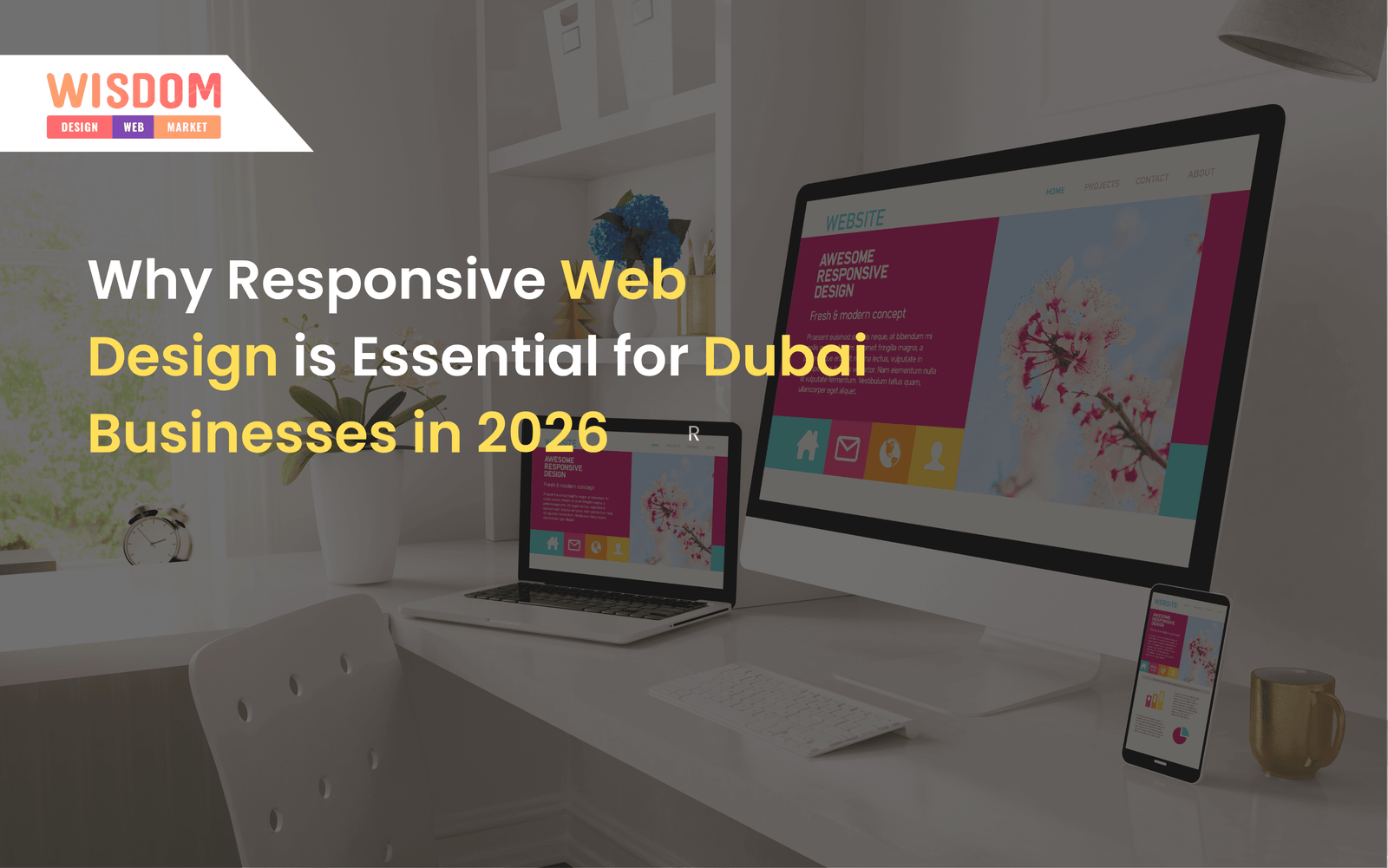
Why Responsive Web Design is Essential for Dubai Businesses in 2026

In today’s fast-paced digital world, having a strong online presence is not optional—it’s essential. For Dubai businesses, the importance of a website that performs well on all devices is even greater due to the city’s fast-growing market and highly competitive digital landscape. In 2026, responsive web design is no longer just a trend—it is a fundamental requirement for business growth, customer trust, and online visibility.
What is Responsive Web Design?
Responsive web design means building a website that automatically adjusts to different screen sizes and devices. Whether a user visits your site on a smartphone, tablet, laptop, or desktop, the website layout adapts to provide the best user experience.
Key elements of responsive design:
Flexible layouts
Scalable images
Adaptive content
Mobile-friendly navigation
1. Dubai Has One of the Highest Mobile Usage Rates
Dubai is known for its tech-savvy population. Most users access the internet through smartphones and tablets. A website that is not mobile-friendly will:
Load slowly
Look broken
Lose customer trust
Increase bounce rates
Responsive design ensures your website looks perfect on every device, improving user experience and increasing conversion rates.
2. Google Prioritizes Mobile-First Indexing
Google ranks websites based on mobile performance first. This means:
- If your website is not responsive, you will lose rankings in search results.
- Your business may appear lower than competitors, even if your services are better.
In 2026, mobile-first indexing is not optional—it is mandatory.
3. Faster Page Loading Improves User Experience
A responsive website is usually faster because it uses optimized images and efficient code. Faster loading leads to:
Higher user retention
Better customer satisfaction
More sales and leads
Lower bounce rate
In Dubai’s competitive market, speed can be the difference between gaining a customer or losing them.
4. Better User Experience Builds Brand Trust
Dubai consumers value professionalism and trust. A website that works smoothly on all devices reflects credibility.
A responsive website shows that your business:
Is modern
Is trustworthy
Cares about customer experience
This trust directly affects customer decisions and brand loyalty.
5. Responsive Design Saves Money in the Long Run
Many businesses in Dubai still use separate websites for desktop and mobile. This is expensive and inefficient.
Responsive design allows you to manage a single website, saving costs on:
Development
Maintenance
Updates
Content management
In 2026, cost efficiency is a major advantage for small and medium businesses.
6. Improved Conversion Rates and Sales
Responsive websites make it easier for customers to:
Browse products
Fill contact forms
Place orders
Make bookings
A better browsing experience leads to higher conversion rates and increased revenue.
For Dubai businesses, this means more customers, more trust, and more sales.
7. Enhanced Local SEO for Dubai Businesses
Local SEO is crucial in Dubai because most people search for nearby services. Responsive design supports local SEO by:
Improving mobile experience
Reducing bounce rate
Increasing time on page
Boosting rankings in local search results
If your website is responsive, it becomes easier for local customers to find you.
8. Future-Proofing Your Business in 2026
Technology is evolving rapidly. New devices, screen sizes, and user behaviors are constantly emerging.
Responsive design helps your website stay:
Compatible with future devices
Adaptable to new screen sizes
Updated without major redesigns
This future-proofing is essential for long-term business success.
FAQs (Frequently Asked Questions)
1. What is the difference between responsive and mobile-friendly websites?
A responsive website automatically adjusts to any screen size.
A mobile-friendly website may only be optimized for mobile, but not for tablets or different screen sizes.
2. How does responsive design affect SEO?
Responsive design improves SEO by improving:
Mobile experience
Page speed
User engagement
Bounce rate
Google prefers responsive websites for ranking.
3. Is responsive design necessary for Dubai businesses?
Yes. Dubai has high mobile usage and strong digital competition. Responsive design improves user trust, leads, and sales.
4. How long does it take to build a responsive website?
A responsive website typically takes 2 to 6 weeks, depending on:
Design complexity
Content volume
Features required
5. Can a responsive website increase conversions?
Yes. A responsive website improves user experience, leading to:
Higher engagement
More leads
Higher sales